
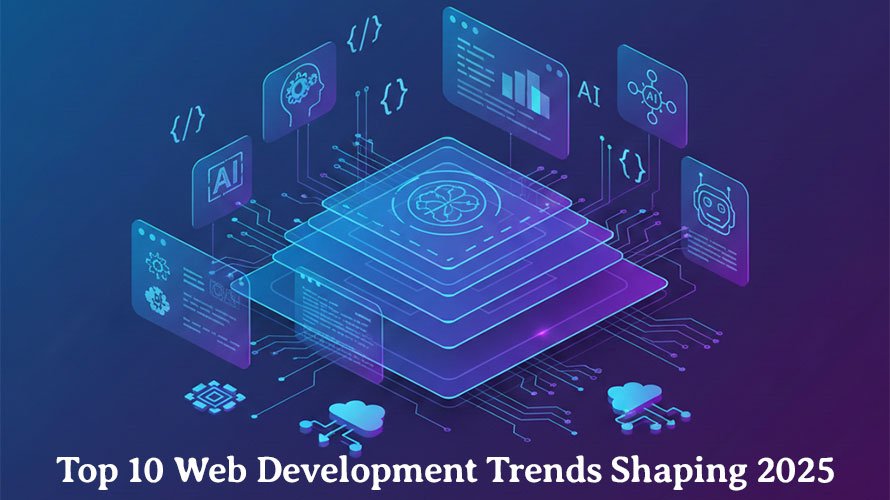
The world of web development is evolving faster than ever. With new technologies, smarter tools, and changing user expectations, businesses must stay ahead to remain competitive online. As we enter 2025, several key trends are redefining how websites and web applications are built. Whether you’re a developer, business owner, or tech enthusiast, here are the top 10 web development trends shaping 2025.
1. AI-Powered Development & Intelligent Web Experiences
Artificial Intelligence is transforming the entire web development industry. Developers now use AI tools to generate code, test applications, and automate repetitive tasks. On the user side, AI-powered chatbots, smart search, and personalization engines create highly tailored user experiences.
In 2025, AI isn’t an option — it’s essential for faster development and smarter digital experiences.
2. Progressive Web Apps (PWAs)
PWAs continue to gain popularity because they combine the best of both worlds — the reach of websites and the performance of mobile apps.
They are fast, installable, work offline, and deliver app-like experiences. Many businesses now prefer PWAs over traditional native apps, saving both time and development cost.
3. Serverless Architecture & Cloud-Native Development
The shift toward serverless platforms is accelerating. Developers no longer need to manage or maintain servers — cloud providers handle scalability, performance, and security.
This approach makes web apps more efficient, cost-effective, and easier to scale during traffic spikes.
4. Headless CMS & Composable Architecture
Headless CMS has changed the way digital content is delivered. Instead of a traditional CMS with a fixed frontend, headless systems allow developers to deliver content across websites, apps, IoT devices, and more.
Composable architecture (mixing different services via API) gives businesses maximum flexibility and future-proofing.
5. WebAssembly (WASM) for High-Performance Apps
WebAssembly is becoming a game-changer for building high-performance web applications such as video editors, games, data-heavy tools, and CAD software—all running smoothly in the browser.
In 2025, more companies are adopting WASM to deliver near-native speed without requiring users to install software.
6. Motion UI & Interactive Web Design
Visually engaging websites are becoming a standard. Motion UI, micro-interactions, animations, and interactive elements help brands create delightful user experiences.
These small design touches improve navigation, guide user actions, and increase engagement and conversions.
7. Voice User Interface (VUI) & Voice Search Optimization
Voice assistants are everywhere, and voice search is increasing rapidly.
Websites are now optimizing for conversational queries and integrating voice-driven navigation.
In 2025, voice-enabled web experiences will become an expectation, especially for e-commerce and service websites.
8. Web3, Blockchain & Decentralized Web Technologies
Web3 is influencing secure identity, data ownership, authentication, and digital transactions.
Decentralized applications (dApps) and blockchain-based solutions are gaining relevance in industries like finance, healthcare, and e-commerce.
While still evolving, Web3 technologies are shaping a more transparent and secure internet.
9. Stronger Focus on Cybersecurity & Data Privacy
With AI, automation, and highly connected systems, cybersecurity is more critical than ever.
Web developers are adopting practices like zero-trust security, multi-factor authentication, encryption, and strict data handling policies.
Users expect privacy, and businesses must deliver safe online experiences.
10. Low-Code & No-Code Development Platforms
Low-code and no-code platforms are democratizing web development.
Businesses can now build websites, apps, and internal tools without hiring large development teams.
These tools speed up delivery, reduce costs, and enable more people to bring digital ideas to life.
Final Thoughts
The future of web development is exciting, fast-paced, and powered by innovation.
From AI-driven tools to high-performance technologies like WebAssembly, the trends of 2025 empower developers to build smarter, faster, and more immersive digital experiences.
Staying ahead of these trends can help businesses remain competitive, improve customer engagement, and deliver cutting-edge solutions.

Hi, this is a comment.
To get started with moderating, editing, and deleting comments, please visit the Comments screen in the dashboard.
Commenter avatars come from Gravatar.